Back to School After Covid Illustrations: A Creative Toolkit
Returning to the classroom after the global pandemic wasn't a simple flick of a switch. It was a complex emotional landscape—a blend of excitement for normalcy, lingering anxiety about health, and the awkwardness of social reintegration. As creators, capturing that specific, nuanced moment is challenging. Generic stock imagery often falls flat, missing the authentic feelings of the era. That’s where a dedicated resource like the Back to School After Covid Illustrations set becomes invaluable. It’s not just a collection of images; it's a visual narrative toolkit designed to reflect the real, multifaceted experience of students and educators stepping back into a changed world.
Visual Style and Authentic Character Design
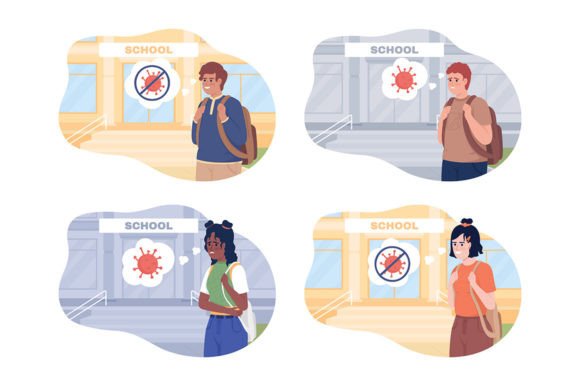
The strength of this collection lies in its thoughtful, 2D vector isolated illustration style. The characters aren't just smiling placeholders. They are flat characters with distinct personalities. You'll find the anxious student, perhaps fidgeting with a backpack strap, and the happy student, beaming with the joy of reunion. This emotional range is critical for relatability. The cartoon background elements are intentionally simple and colorful, ensuring the characters remain the focal point without visual clutter.
From a design perspective, the colourful editable scene collection is a major practical advantage. The illustrations are provided in formats like SVG, PNG on transparent background, and EPS, JPEG, AI on white background. This isn't just a file list; it's a workflow consideration. A transparent PNG is perfect for quick drop-ins on websites or social media posts. An SVG or AI file gives a graphic designer or a small business owner full control to recolor elements, adjust scale without quality loss, and integrate the art seamlessly into larger brand identity projects or packaging design mockups.
Practical Applications for Modern Creators
So, where does a set like this actually work? The applications are broader than one might initially think, spanning both digital and physical realms. For marketers and bloggers, these illustrations are perfect for creating empathetic, timely content. Imagine a blog post titled "5 Tips for Managing Back-to-School Anxiety" brought to life with an illustration of a thoughtful student, or a social media graphic for a school supply sale that feels warm and understanding rather than pushy.
Entrepreneurs and small business owners can leverage these assets for more than just decoration. They can form the cornerstone of a seasonal campaign. A local tutoring center could use the happy student character in their logo design for the fall term, creating a friendly and recognizable face for their services. The consistency of using the same character set across a website, flyers, and email newsletters builds a cohesive and professional visual identity, enhancing brand recognition.
For publishers and content creators, the value is in storytelling. The illustrations can visually anchor an e-book chapter, illustrate a digital magazine article, or add personality to an online course module. The fact that the collection includes four distinct scenes means you can show a progression—preparation, arrival, interaction, and learning—creating a visual journey for your audience.
Integrating Illustrations into Your Design Workflow
Adopting a new set of design assets requires a bit of strategy. First, consider the visual hierarchy of your project. These illustrations, with their bold lines and clear shapes, act as strong focal points. They work best when paired with clean, legible typography—think a modern sans serif font for body text and a complementary display font for headlines. Avoid pairing them with overly ornate script fonts or complex serif fonts, which can create visual competition and hurt readability.
Next, evaluate the project fit. The style is friendly, contemporary, and slightly whimsical. It’s ideal for projects targeting parents, students, educators, and community organizations. It might be less suitable for a highly corporate financial report, but it’s perfect for a family-oriented brand, a creative agency's portfolio, or a nonprofit's awareness campaign. Always test the illustrations in context. Place them in your layout mockup to see how they interact with your color palette, other graphics, and the overall tone of the message.
Finally, understand the licensing. Since this is a premium font and illustration set, reviewing the commercial license is essential. Most reputable sources, like the shop mentioned (vector characters for your projects, backgrounds for animations, ready-made banners!), will provide clear terms. Knowing whether you can use the assets in merchandise, for client work, or in unlimited digital products protects your investment and ensures you're operating professionally. For the latest assets and potential discounts, subscribing to updates from sources like NTL studio is a smart move for any serious creative professional looking to keep their toolkit fresh and relevant.