Charming Vectors: Japanese Food Retro Style Illustrations
The Nostalgic Allure of Mid-Century Japanese Design
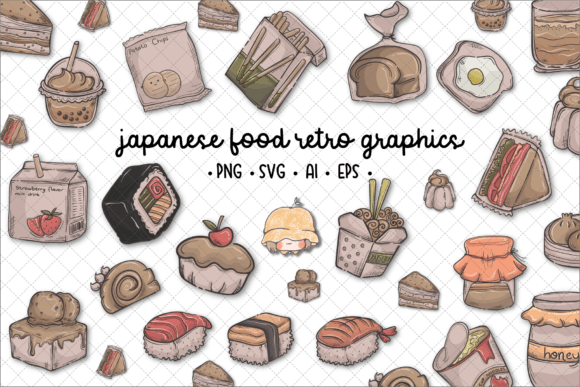
There is a distinct warmth found in the intersection of culinary appreciation and vintage graphic design. Japanese Food Retro Style Illustrations capture this sentiment perfectly, offering a visual language that speaks of tradition, comfort, and timeless aesthetic appeal. These aren't just simple drawings; they are carefully crafted digital assets that mimic the texture and hand-drawn quality of mid-20th-century artwork. When you look at a collection like this, featuring everything from Sushi and Onigiri to Milktea and Coffee, you are seeing a blend of flat design principles with organic, hand-drawn linework. The style typically relies on a limited but impactful color palette—think muted reds, warm beiges, and slate grays—evoking the feeling of old shop signage or vintage postcards.
For designers and entrepreneurs, the visual personality of these illustrations is a significant asset. Unlike hyper-realistic 3D renders, which can feel cold or overly commercial, retro illustrations possess a "human" quality. They suggest authenticity and craftsmanship. When applied to packaging design or brand identity, these graphics instantly communicate a story. A coffee shop owner using these vectors isn't just selling a beverage; they are selling an experience rooted in comfort and nostalgia. This aesthetic bridges the gap between modern minimalism and the intricate details of traditional Japanese art, making it versatile enough for contemporary web design while maintaining a classic soul.
Practical Applications: From Sublimation to Brand Identity
The true value of a digital asset lies in its adaptability. Japanese Food Retro Style Illustrations are particularly effective because they are designed for high-performance output. With inclusions like SVG files for Cricut and high-resolution PNGs, these assets move seamlessly from screen to physical product. For crafters and small business owners, this is where the magic happens. Imagine applying these designs to sublimation prints on ceramic mugs or tote bags. The high-quality vector format ensures that whether you are printing a tiny sticker or a large poster, the lines remain crisp and the colors stay true. This scalability is a hallmark of premium font and vector assets; they do not pixelate, ensuring your final product looks professional regardless of size.
In the realm of editorial design and social media graphics, these illustrations serve as excellent focal points. A food blogger can use a single sushi illustration to break up text-heavy sections, or a marketing team can use a set of coffee graphics to create a cohesive Instagram grid. Because the style is consistent across the set—covering Sandwiches, traditional foods, and beverages—it allows for mix-and-match creativity without visual dissonance. This consistency is crucial for maintaining a professional brand identity. When your packaging, website, and social media all utilize the same artistic style, you build recognition and trust with your audience.
Strategic Implementation and Design Integration
When integrating Japanese Food Retro Style Illustrations into your workflow, consider the principles of visual hierarchy. These illustrations are detailed enough to stand alone but stylistically balanced enough to complement typography. For instance, pairing a bold, retro illustration with a clean sans serif font can create a striking contrast that draws the eye. Alternatively, using a script font or handwritten font alongside these graphics can enhance the vintage, artisanal feel. It is about creating a dialogue between the text and the imagery. In logo design, a single element—like a stylized coffee cup or a retro sandwich—can become the cornerstone of a brand's visual language, provided it is used with restraint and intentionality.
Furthermore, the licensing and file structure of these assets are designed to support commercial endeavors. The inclusion of AI and EPS files means designers can edit colors and shapes to match specific client needs, offering a level of customization that raster images cannot. This flexibility allows you to adapt the design assets to fit modern color trends or specific campaign themes while retaining the core retro aesthetic. Whether you are a publisher looking for spot illustrations for a cookbook or a marketer designing a limited-time offer menu, the ability to manipulate these vectors ensures they remain a relevant part of your toolkit for years to come.
Elevating Projects with Authenticity
Ultimately, the appeal of Japanese Food Retro Style Illustrations lies in their ability to evoke emotion. In a digital landscape often dominated by generic stock photography, hand-drawn, retro-style vectors offer a breath of fresh air. They signal to your audience that you care about the details. For hobbyists, they offer a way to personalize gifts and home décor with a unique flair. For professionals, they provide a shortcut to high-end aesthetics without the cost of commissioning custom artwork from scratch. By leveraging these creative font companions and vector sets, you are not just decorating a page; you are building a narrative that resonates with a sense of warmth, tradition, and quality.